Homes rarely fall apart one problem at a time. Most major systems share a hidden thread of age, weather exposure, or deferred maintenance, which means when one starts failing, others are often close behind. Learning to spot the overlapping warning signs early can save you from a cascade of expensive emergency repairs happening all at once.
This guide breaks down the key clusters of trouble to watch for, so you can address them on your own timeline instead of a crisis one.
Rising Utility Bills Signal Multiple Systems Under Strain
A slow, steady climb in your energy bills is rarely caused by just one culprit. It usually means your heating and cooling equipment is working harder to compensate for problems elsewhere in the house, such as failing insulation, air leaks, or aging ductwork. When several systems are straining together, the financial pressure compounds quickly, which is why this warning sign deserves early attention rather than a wait-and-see approach.
If your HVAC system is more than twelve years old and running constantly, it may be time to consult AC companies about whether a repair or full replacement makes more financial sense. Many homeowners are surprised to learn that pairing an aging central system with a ductless mini split for problem rooms can relieve strain on the whole house and stabilize bills faster than a single full-system overhaul.
- Compare your last three years of utility bills for the same months to spot real trends
- Have an energy audit done to identify where conditioned air is escaping
- Check attic and wall insulation levels, especially in homes over twenty years old
- Ask about zoned cooling options if only certain rooms feel uncomfortable
Water Stains and Musty Odors Point to Roof and Drainage Failures

Water damage rarely stays contained to one spot. A stain on your ceiling might start as a roofing issue, but left unchecked, it can travel into insulation, framing, and eventually your foundation drainage system. A musty smell in a basement or crawlspace paired with a spot on the upper floors is a strong sign that multiple water-management systems are compromised simultaneously.
Reputable roofing companies will tell you that granule loss, curling shingles, and flashing separation are early indicators of a roof nearing the end of its service life. If you notice these signs alongside soggy patches in your yard or slow-draining gutters, it is worth having roofers inspect the full roofline and drainage path together rather than patching one visible leak and ignoring the rest.
- Look for dark streaks or curling edges on shingles from the ground with binoculars
- Check attic insulation for damp spots after heavy rain
- Note any new cracks in ceiling paint or drywall
- Watch for water pooling near the foundation after storms
Slow Drains Throughout the House Suggest a Bigger Plumbing Problem
A single slow drain is usually a localized clog, but when multiple sinks, tubs, and toilets back up around the same time, the issue is likely deeper in your plumbing or septic system. This pattern often means tree roots, grease buildup, or a collapsing pipe section is restricting flow throughout the entire house rather than in one isolated fixture.
Scheduling routine drain cleaning services before a full blockage occurs is far less disruptive and less expensive than an emergency call when every drain in the house stops working at once. If your home relies on a septic system, this slowdown can also be a sign that septic pumping is overdue, since a full tank backs pressure into your household pipes and mimics the symptoms of a clog.
- Track how many fixtures are slow to drain, not just one
- Note any gurgling sounds coming from other drains when you flush
- Check your yard for unusually soggy or bright green patches, a sign of septic trouble
- Keep a maintenance log of when drains and tanks were last serviced
Doors and Windows That Stick Reveal Structural Movement

When multiple doors and windows suddenly become difficult to open or close, it is rarely a coincidence. Homes shift slightly with seasonal moisture changes, but widespread sticking across several openings can indicate foundation settling, framing issues, or humidity imbalances affecting the whole structure at once. This is a sign worth taking seriously rather than simply planing down a stubborn door.
If you are noticing drafts, fogging between glass panes, or visible gaps around frames in more than one room, consulting a window installer can help determine whether the issue is isolated hardware wear or a broader structural shift. Addressing several problem windows in one visit is often more cost-effective than replacing them one at a time as each one fails.
- Test every exterior door and window for sticking, not just the ones you use daily
- Check for visible daylight around window frames
- Look for cracks radiating from door and window corners inside and out
- Note whether problems appeared suddenly after a storm or gradually over seasons
A Garage Door That Struggles Often Signals Wear Elsewhere
Garage doors carry some of the heaviest moving hardware in a home, and when the opener strains or the door hangs unevenly, the spring system is frequently to blame. Because garage door springs bear the bulk of the door’s weight, their failure often coincides with other wear-related issues in the same part of the house, such as worn weatherstripping or a failing opener motor.
If you hear loud bangs, notice the door closing unevenly, or see visible gaps in the coiled spring, scheduling broken garage door spring repair promptly is important both for convenience and safety, since a snapped spring under tension can cause injury. Waiting until the door fails completely usually means paying for emergency service rather than a planned, less costly appointment.
- Listen for grinding, popping, or banging sounds during operation
- Check if the door opens and closes evenly on both sides
- Inspect the spring for visible gaps, rust, or stretching
- Test the auto-reverse safety feature monthly
Faded or Buckling Exterior Materials Indicate Aging Envelope Protection
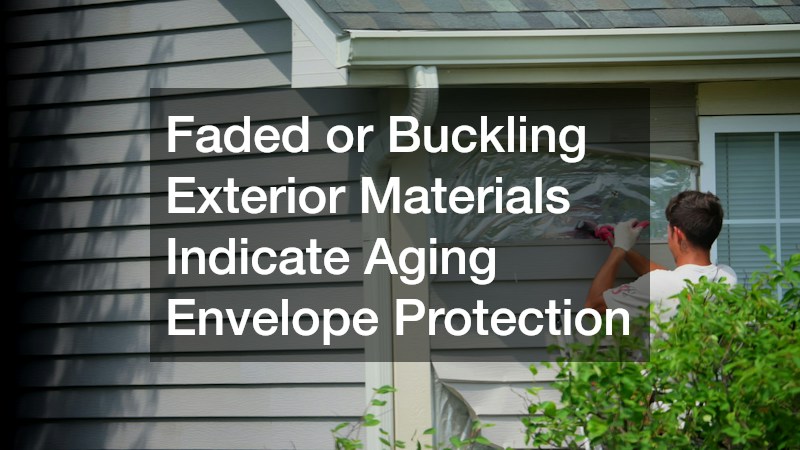
Your home’s exterior shell works as a single protective system, and when one material starts failing, others usually are not far behind. Siding that is cracked, warped, or fading unevenly often means moisture has been getting behind the surface for longer than it appears, which can affect insulation, framing, and even the roofline it meets.
Look closely at specific warning patterns rather than just general wear. Bubbling or peeling paint near seams, dark streaking under window sills, and soft spots you can press a finger into all suggest water intrusion that has already reached the sheathing beneath. Vinyl siding that has warped or buckled is especially telling, since it usually means repeated exposure to heat or trapped moisture has already compromised the material’s structure, not just its appearance.
The location of the damage matters as much as its severity. Deterioration near ground level often points to drainage or grading issues, while problems higher up near the roofline can signal flashing failures or gutter overflow. Either scenario can quietly funnel water into wall cavities for months before any interior signs appear.
Left unaddressed, this kind of envelope failure rarely stays contained to the siding itself. Trapped moisture can rot wood framing, degrade insulation’s R-value, and create conditions for mold growth, turning what looks like a cosmetic fix into a structural one costing several times more.
Faded, chalky, or buckling siding is rarely just a cosmetic issue—it’s often a sign that your home’s exterior envelope has stopped doing its job. Experienced siding contractors often find that homeowners call about one damaged section, such as a warped panel near a downspout or a cracked piece behind a shrub, only to discover moisture intrusion has spread across an entire wall once the material is removed. What looked like a minor repair turns into replacing sheathing, insulation, and sometimes framing that’s been quietly rotting for months or years.
This happens because siding acts as the first line of defense against wind-driven rain, humidity, and temperature swings. Once caulking dries out, seams separate, or panels warp from heat exposure, water finds its way behind the material and gets trapped. Telltale signs include bubbling paint, a musty smell near exterior walls, soft spots when you press on siding, or visible gaps at corners and window trim.
Since siding and roofing meet at critical junctions like fascia, soffits, and flashing, problems in one area frequently point to trouble in the other. A leaking gutter or deteriorated roof edge can send water cascading down behind siding for years before symptoms are visible from the ground. This is why a combined inspection—checking rooflines, flashing, and wall cladding together—is far more useful than assessing each system in isolation, and can catch cascading damage before it spreads to insulation, framing, or interior finishes.
- Look for warping, bubbling, or discoloration across multiple sections, not just one—isolated wear is normal aging, but widespread damage signals systemic moisture intrusion
- Check corners and seams where siding meets the roofline, windows, or foundation, since these transition points fail first and let water travel behind the material
- Tap on suspect areas with a screwdriver handle to listen for hollow or soft sounds indicating rot, then press gently to feel for give or crumbling
- Note any increase in pest activity like carpenter ants, termites, or wasps, which often follows moisture damage since damp, decaying wood attracts them
- Watch for chalky residue or fading that’s uneven across the same wall, which can mean the protective coating has worn through in specific spots
- Inspect caulking and flashing for cracks or gaps wider than an eighth of an inch, since these small openings let water infiltrate over time
Uneven Temperatures Room to Room Reflect a System in Decline
If some rooms feel noticeably warmer or colder than others despite a functioning thermostat, your home’s heating and cooling distribution is likely struggling. This unevenness often develops gradually, so many homeowners do not notice it until the discomfort becomes hard to ignore during extreme weather.
In older homes, uneven temperatures often trace back to leaky ductwork, failing insulation, or a system that has simply outgrown the space it was designed to serve. As homes age, sections of ducting can loosen or degrade, and insulation in walls or attics can settle or compress, leaving certain rooms disconnected from consistent airflow. Addressing these root causes typically restores balance more effectively than repeatedly adjusting the thermostat to compensate.
- Use a simple room thermometer to compare temperatures at the same time of day
- Check vents for weak or inconsistent airflow
- Inspect ductwork in accessible areas for disconnections or damage
- Consider whether additions or renovations were properly integrated into the original system
A Dark Yard at Night Can Mean More Than a Burned-Out Bulb

Exterior lighting failures are often dismissed as minor, but widespread outages across your property can indicate underlying electrical wear that also affects other outdoor systems. Corroded wiring, water intrusion in fixtures, or a failing transformer can leave multiple areas dark at once rather than just one bulb burning out.
Upgrading to modern landscape lighting with sealed connections and updated transformers not only solves the immediate visibility issue but also reduces the electrical strain that can contribute to broader outdoor system problems. Since exterior electrical issues sometimes share a source with irrigation or security system malfunctions, a full outdoor inspection is often more useful than replacing bulbs one at a time.
- Check whether multiple fixtures fail at once versus a single bulb
- Inspect wiring connections for corrosion after wet seasons
- Test the transformer output with a multimeter if comfortable doing so
- Note any flickering that coincides with other electrical issues indoors
A Home Inspection Timeline Helps You Catch Overlapping Problems Early
Many of the warning signs above develop slowly enough that homeowners miss the connections between them until several systems fail close together. Building a simple seasonal inspection habit, walking the roofline, checking drains, testing doors and windows, and reviewing utility bills, can help you catch these overlaps months before they become emergencies.
Keeping a written record of when each major system was last inspected or serviced makes it far easier to spot patterns, such as a roof and siding both nearing twenty years old at the same time. This kind of proactive tracking turns a stressful multi-system failure into a series of manageable, scheduled repairs instead.
- Set calendar reminders for spring and fall inspection walks
- Keep receipts and service dates in one folder or app
- Note the installation age of major systems when you move into a home
- Prioritize repairs based on safety risk first, cost second
Conclusion
No home system fails in complete isolation, which is why noticing these overlapping warning signs early puts you back in control of your budget and your timeline. Start with a simple walk-through of your home this weekend, checking drains, doors, utility bills, and the exterior, to see how many of these patterns you can already spot. Addressing even one issue now is far easier than managing several emergencies at once later.
About the Author